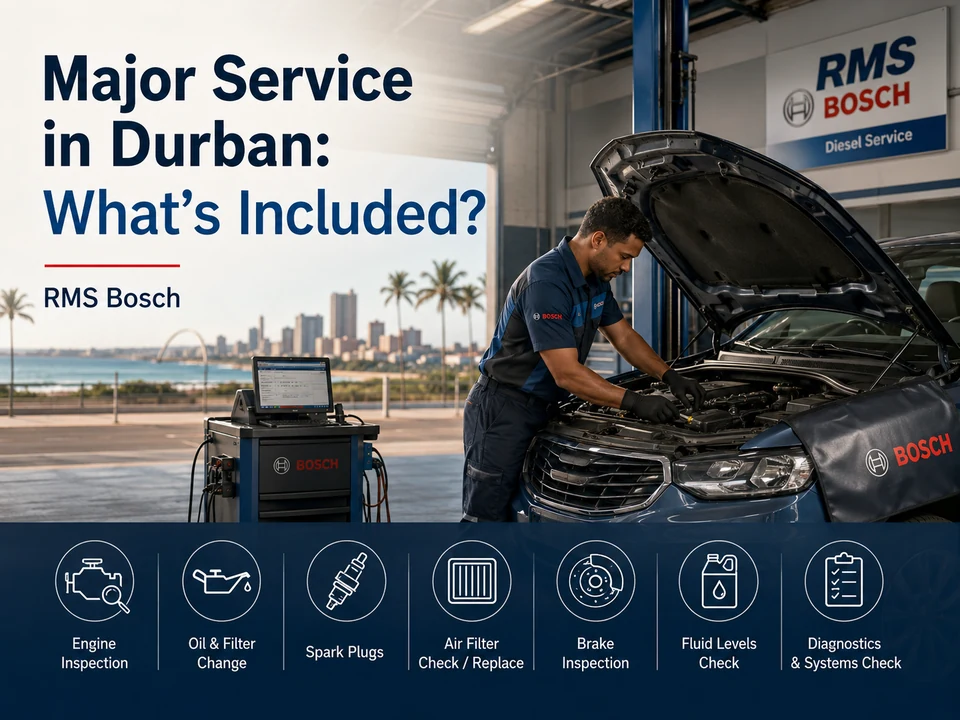
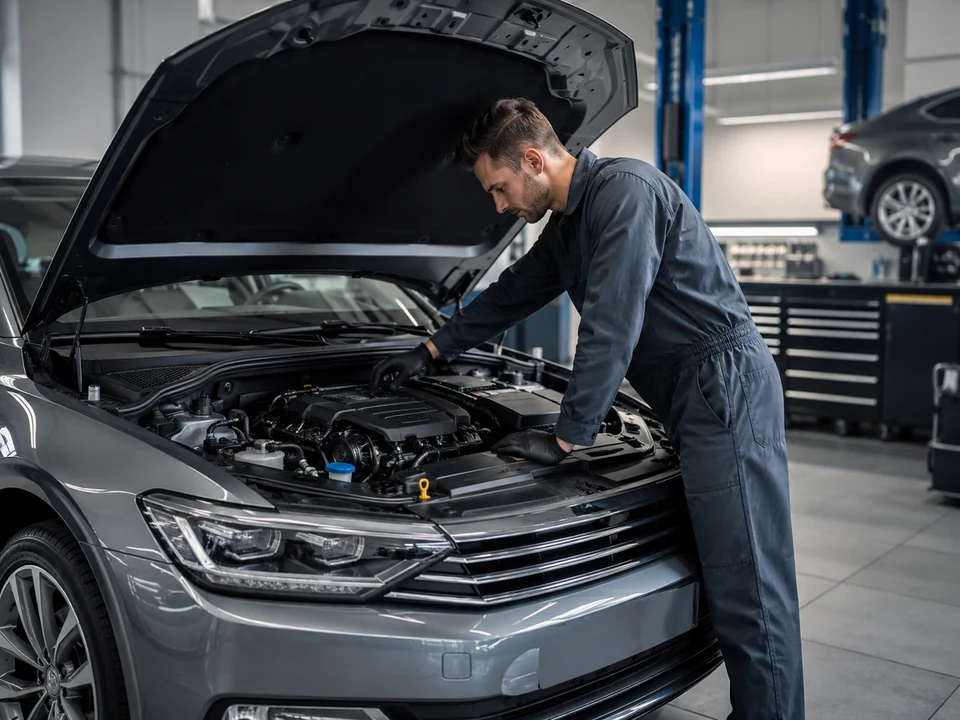
A major service is a deeper vehicle health check that goes beyond an oil change. It helps identify developing wear early and protects safety, performance and long-term reliability.
What a major service covers
A major service combines scheduled replacement items with a broader inspection of the systems that keep your vehicle safe and reliable. The exact work depends on the manufacturer schedule, mileage, vehicle age and condition.
Common checks and replacement items
Engine oil and oil-filter replacement
Air, fuel and cabin filters where required
Spark-plug inspection or replacement on applicable petrol vehicles
Brake, suspension, steering and tyre checks
Cooling-system, battery and charging-system checks
Diagnostic scanning when warning lights or performance concerns are present
Why it matters
Blocked filters, worn spark plugs, weak batteries, coolant leaks and brake or suspension wear can begin as small concerns. Finding them during scheduled maintenance can prevent breakdowns, protect fuel economy and reduce the risk of larger repairs.
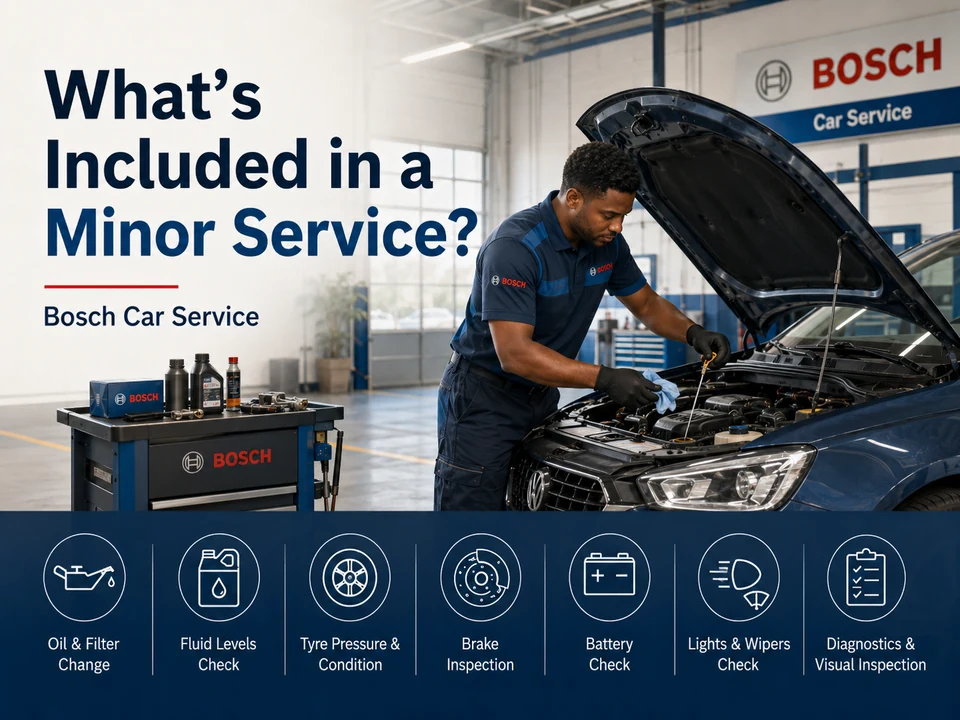
What’s Included in a Minor Service? Bosch Car Service
A minor service covers essential routine maintenance between major-service intervals, helping the engine remain lubricated while technicians check key safety and reliability items.
What is normally included
A minor service usually focuses on engine oil, the oil filter and a practical inspection of the vehicle. Requirements differ between makes and models, so the manufacturer service schedule remains the correct starting point.
Correct-grade engine oil and a new oil filter
Fluid-level, visible-leak and cooling-system checks
Basic brake, tyre, light and wiper inspection
Battery condition and general under-bonnet checks
Service-indicator reset where applicable
Minor service versus major service
A minor service does not replace a major service when deeper scheduled maintenance is due. A major service normally includes more replacement items and more extensive checks. Following the correct interval helps protect the vehicle’s reliability and service history.
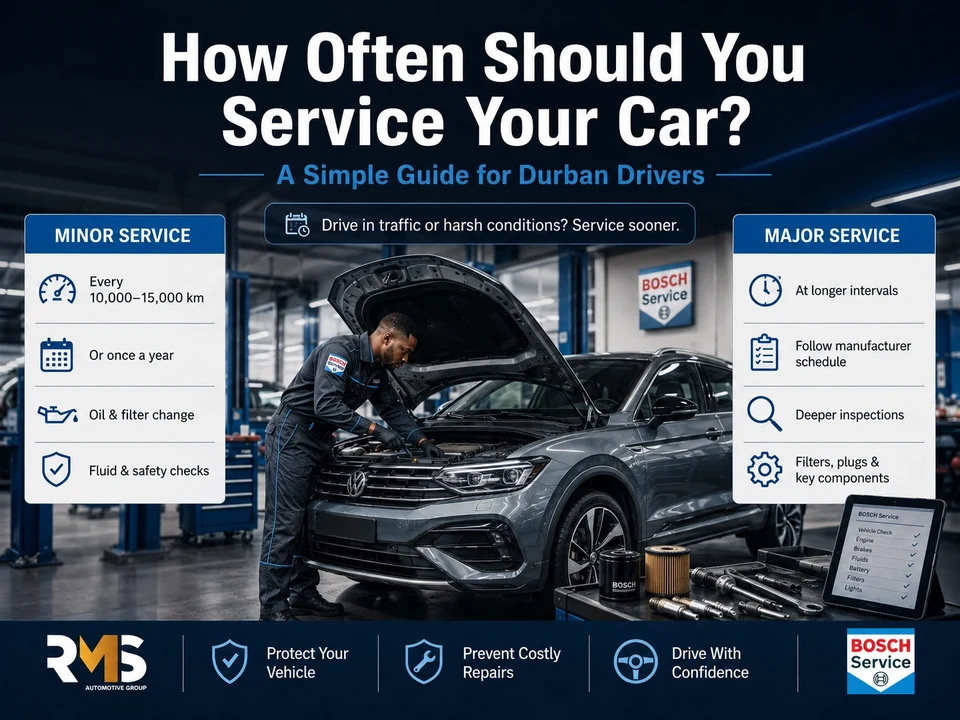
How Often Should You Service Your Car? | Bosch Durban
Service intervals should follow the manufacturer schedule, but mileage, time, driving conditions and vehicle use can all influence how soon attention is needed.
How often should a vehicle be serviced?
Use the service book or manufacturer schedule as the main guide. Many vehicles reach a service point by mileage or elapsed time—whichever comes first. Vehicles used in heavy traffic, dusty areas, short repeated trips or demanding commercial work may need closer monitoring.
Warning signs between services
Service or engine warning lights
Rough idling, difficult starting or reduced performance
Higher fuel consumption
Fluid leaks, overheating or unusual smells
Brake, suspension or steering changes
Why regular servicing matters
Regular maintenance supports engine protection, braking safety, fuel efficiency and long-term reliability. Waiting for a breakdown usually removes the opportunity to manage a smaller issue before it becomes a costly repair.
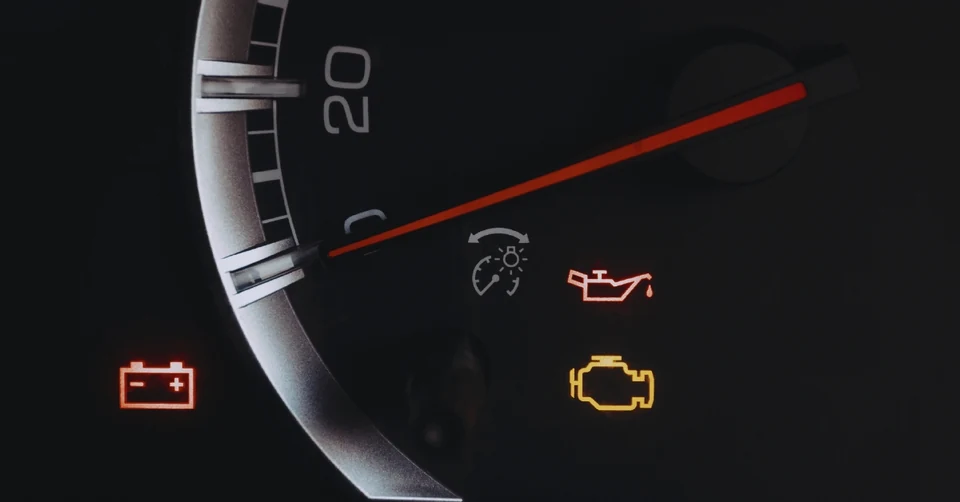
Don’t Ignore Your Engine Light – Meaning and Importance
An engine warning light means the vehicle has detected a fault. It may not always be severe, but it should be tested rather than ignored or diagnosed through guesswork.
What the warning light means
The engine-management system has detected information outside its expected range. The cause may involve a sensor, ignition, fuel delivery, emissions, temperature control or another electronic or mechanical system.
Why early diagnostics matter
A fault can increase fuel consumption or reduce power
Misfires can damage the catalytic converter
Cooling faults can contribute to overheating
Small unresolved issues can develop into larger engine repairs
Solid light versus flashing light
A solid warning light should be checked promptly. A flashing engine light can indicate a severe misfire and possible engine damage; reduce risk and arrange professional assistance. A diagnostic scan provides fault information, but technicians must still test and verify the actual cause before recommending the repair.
When Should You Replace Your Brakes – An Expert Guide
Brake-pad life varies according to the vehicle, driving conditions and driver habits. Noise, vibration or pedal changes should be inspected before braking performance deteriorates.
Common brake warning signs
Squealing, scraping or grinding noises
Steering-wheel or pedal vibration while braking
A soft, hard or unusually low brake pedal
The vehicle pulling to one side
Longer stopping distances or a brake warning light
What should be inspected
A proper brake assessment considers pad thickness, disc condition, fluid, hydraulic components and signs of uneven wear. Replacing pads without checking the complete system can leave the underlying problem unresolved.
When to act
There is no single replacement distance that applies to every vehicle. City traffic, towing and frequent heavy braking can accelerate wear. Early inspection helps protect stopping performance and may prevent worn pads from damaging brake discs.
Engine Overheating: Causes, Warning Signs and How to Prevent Serious Damage
Overheating can cause serious engine damage in a short time. Temperature warnings, steam, coolant loss or repeated overheating require immediate attention and proper testing.
Common causes of overheating
Low coolant or an external coolant leak
Radiator, hose, thermostat or water-pump concerns
Cooling-fan or electrical faults
Restricted coolant flow or internal engine problems
What to do
If the temperature rises into the danger zone or steam is visible, stop safely and switch the engine off. Do not open a hot cooling system. Continuing to drive can damage the cylinder head, head gasket and other major engine components.
Diagnosis and prevention
Once the vehicle is cool, the system should be checked for leaks, pressure loss, fan operation and circulation problems. Correct coolant levels, scheduled maintenance and early attention to warning signs reduce the risk of a preventable overheating event.
Why You Should Service Your Car’s Air-Conditioning — Not Just “Regas”
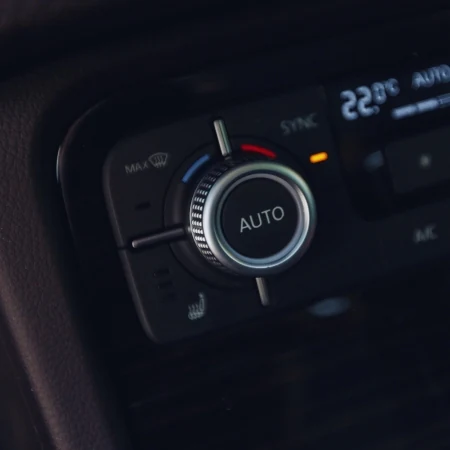
A proper air-conditioning service does more than add refrigerant. It checks system pressure, refrigerant quantity, leaks and operation before the system is recharged.
Why a regas may not be enough
If the system has lost refrigerant, there may be a leak or another fault. Simply adding gas can provide only temporary cooling while leaving the reason for the loss unresolved.
What proper service can include
Recovering and measuring the existing refrigerant
Vacuum and leak testing
Checking compressor, fan and electrical operation
Recharging with the correct refrigerant quantity
Assessing cabin-filter condition and ventilation performance
Protecting the system
Low refrigerant can make the compressor work harder and reduce cooling efficiency. Proper testing is especially important in KwaZulu-Natal’s hot and humid conditions, where dependable air-conditioning affects comfort and demisting performance.
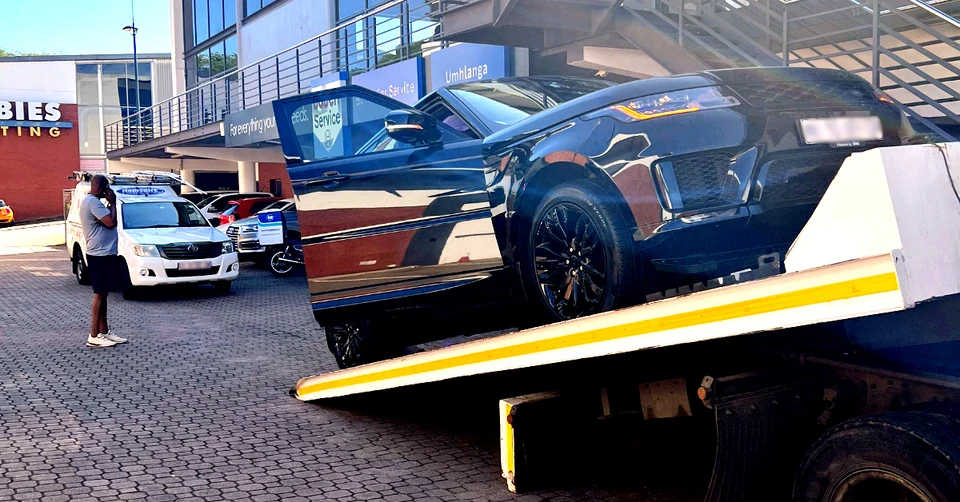
Mechanical breakdown towing is about safely recovering the vehicle and taking it to the right workshop for diagnosis before further damage occurs.
When breakdown recovery may be needed
Engine failure or severe overheating
Electrical or starting-system failure
Clutch, gearbox or drivetrain concerns
Unsafe brake, steering or suspension faults
A vehicle that cannot be driven without risking further damage
Safety first
Move out of traffic where it is safe to do so, switch on the hazard lights and avoid attempting roadside repairs in a dangerous position. If the vehicle has overheated or lost fluid, continuing to drive may turn a repairable fault into major damage.
The next step
Recovery should connect the breakdown to proper diagnosis. Once the vehicle reaches the workshop, technicians can confirm the cause and explain the repair options rather than recommending repairs based on symptoms alone.